
The cost per wear remains the best indicator to assess whether a piece deserves its place in a responsible wardrobe. An ethical garment worn two hundred times is cheaper than a fast-fashion basic thrown away after ten washes. This logic of textile profitability underpins any credible approach to everyday ethical fashion.
Digital Product Passport textile: reading a garment before buying it

Since the adoption of the first sectoral obligations in 2024 in the EU, the Digital Product Passport is gradually requiring brands to provide information on composition, country of manufacture, reparability, and social traceability via a digital label (QR code or NFC chip). For an informed buyer, this system changes the game.
Specifically, scanning a QR code in-store or on a product sheet allows for the verification of three critical points: the actual origin of the fiber, the number of intermediaries in the production chain, and the reparability score of the garment. An incomplete or absent digital passport indicates a lack of traceability, which is enough to dismiss the item.
We recommend cross-referencing this information with already recognized labels (GOTS for organic cotton, OEKO-TEX for the absence of harmful substances). The digital passport does not replace these certifications; it complements them by adding a layer of social and logistical data that labels alone do not cover.
To delve deeper into the criteria for selecting responsible garments, ethical fashion on Breizh Equitable details the sectors that meet these transparency requirements.
Sustainable materials: European hemp and linen versus organic cotton
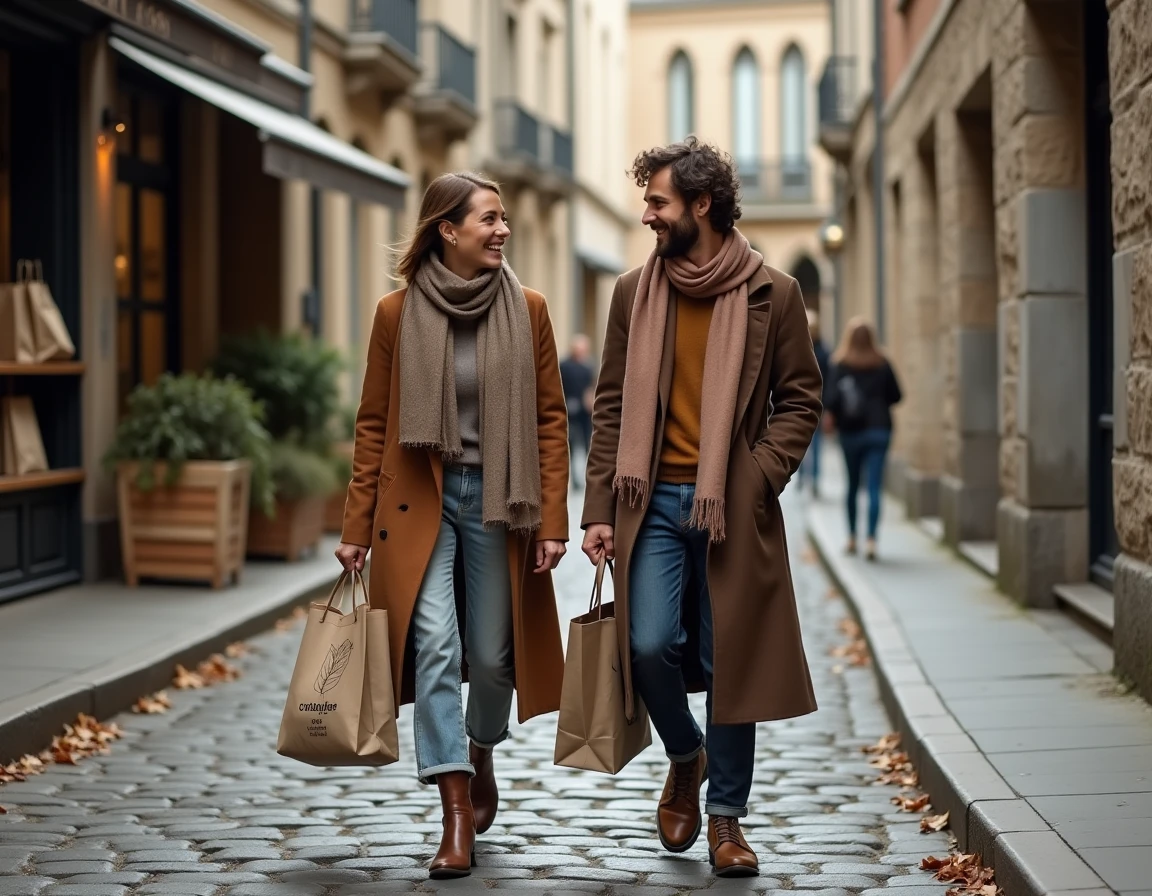
The choice of materials determines the majority of a garment’s environmental impact. Recent industry reports confirm a rapid increase in European hemp and linen in casual and streetwear collections, two fibers that have long been confined to niches.
Linen and hemp: why they are gaining ground
Linen grows in Western Europe without irrigation. Hemp requires very few pesticides and regenerates the soil between crops. These two fibers share a structural advantage: their production cycle remains geographically short when purchasing pieces made on the continent.
In terms of style, linen is no longer reserved for summer shirts. Ethical brands are incorporating it into structured pants, lightweight jackets, and straight-cut dresses that work in any season. Hemp, being more durable, appears in workwear pieces and accessories.
Organic cotton: necessary but not sufficient
Organic cotton eliminates synthetic pesticides, but its cultivation remains water-intensive. We observe that combining organic cotton with local fibers in a wardrobe significantly reduces the overall footprint. Relying solely on organic cotton imported from India or Turkey maintains a heavy carbon logistical dependency.
Quiet luxury aesthetics and capsule wardrobe: reconciling trendy style and reduced consumption
Quiet luxury, old money, and capsule wardrobe aesthetics are not just simple Instagram trends. They reflect a structural rejection of fast fashion by a growing segment of consumers, particularly those aged 18-34.
The principle is based on a small number of quality pieces, simple cuts, and neutral color palettes. This clothing minimalism allows for reducing the number of garments purchased per year without sacrificing appearance. A capsule wardrobe typically operates with around thirty interchangeable pieces.
To build this foundation, we recommend selecting garments based on three criteria:
- Seasonal versatility: each piece should work for at least six months of the year, which excludes overly bold prints or fleeting trendy colors
- Cross-compatibility: a top should pair with at least three bottoms in the wardrobe; otherwise, it remains underutilized
- Mechanical durability: double stitching, sewn buttons (not glued), natural or recycled fibers with a sufficiently dense weight to withstand repeated washing
Second-hand and upcycling: the true entry point to responsible fashion
According to the “Responsible Fashion” barometer from ADEME (2024 edition), resale platforms are the primary entry point to ethical fashion for those aged 18-34, ahead of new purchases from responsible brands. This finding challenges the notion that sustainable fashion necessarily involves certified new items.
Vinted, Leboncoin, or physical consignment shops allow access to quality pieces at reduced prices. The environmental impact is nearly zero since the garment already exists. The real challenge remains selection: buying second-hand is pointless if it results in accumulating pieces worn twice.
Upcycling: transforming rather than discarding
Upcycling involves enhancing an existing garment by transforming it. A worn-out pair of jeans becomes structured shorts, an oversized shirt is resized into a crop top. This approach requires a minimum of sewing skills or the use of a local alteration workshop.
Points to check before embarking on upcycling:
- Actual condition of the fabric: a textile with weakened fibers will not withstand transformation, even if well executed
- Cost of alteration compared to the price of an equivalent second-hand item: beyond a certain threshold, resale and repurchase remain more coherent
- Stylistic potential: not all pieces lend themselves to transformation; prioritize thick fabrics and loose cuts that allow for margin
Ethical fashion does not rely on a single label or a miracle brand. It is built piece by piece, intersecting material traceability, mechanical durability, and actual frequency of wear. A responsible garment is first and foremost a garment that is worn.