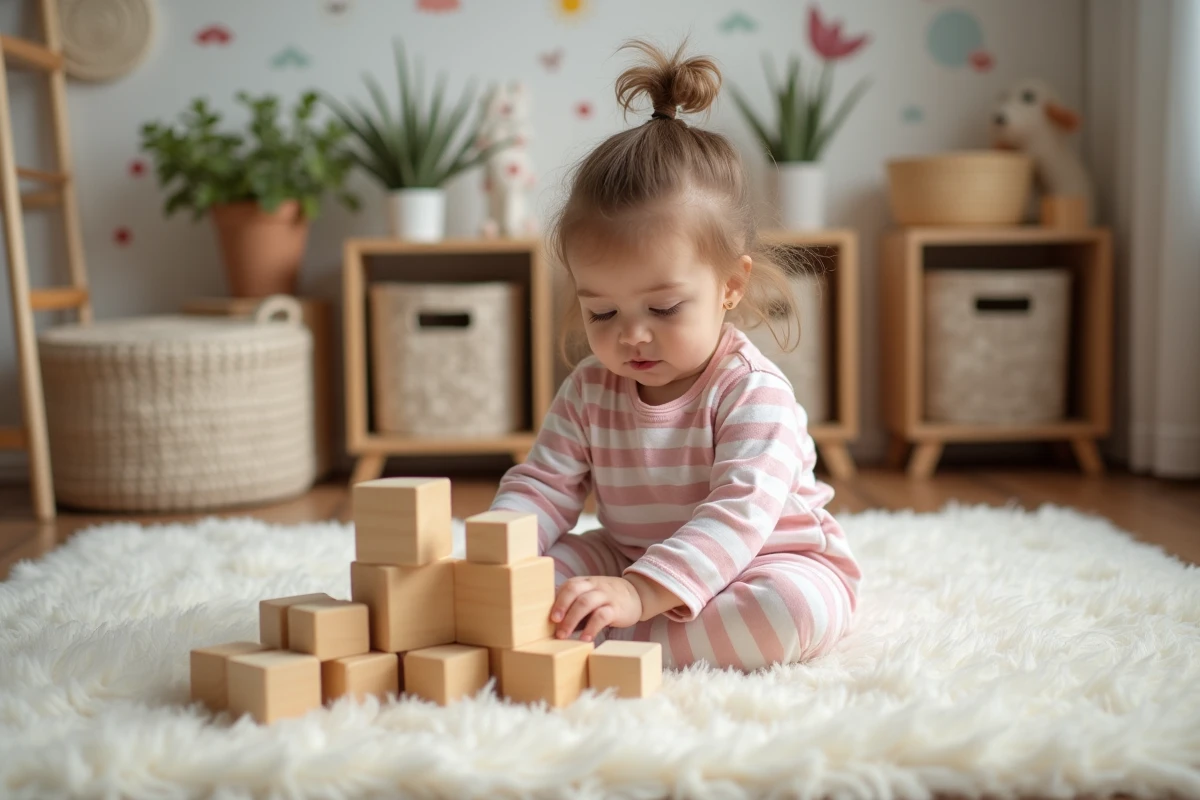
Children’s furniture must meet strict standards, but some manufacturers still circumvent safety requirements. According to INPES, nearly half of domestic accidents involving children occur in their own rooms.
Official recommendations sometimes differ on the choice of materials or the arrangement of spaces. Despite an abundance of options, few items are truly suited to the rapidly evolving needs of children. These discrepancies highlight the need for concrete approaches to reconcile comfort, safety, and development.
Understanding the Essential Needs of Children for a Reassuring Space
Designing a space intended for children goes beyond merely accumulating toys. From a very young age, every child demands a safe play area where they can explore, invent, and learn at their own pace, free from unnecessary dangers. Safety, far from excessive control, relies on a balanced supervision: the adult watches over, but without hindering the child’s desire for autonomy. The child builds their confidence in knowing that someone is there while being given the freedom to take risks.
Free play occupies a central place: it allows the child to take initiatives, experiment, and test their ideas without constant constraints. This freedom, even when guided, stimulates autonomy and confidence. Feedback from the field speaks for itself: 72% of parents note significant progress in basic skills thanks to free play and educational games. In practical terms, a well-designed space offers areas for action, as well as quiet corners for retreat, dreaming, and calming down.
The organization of time and space is equally valuable. When the child has clear rules and a displayed schedule, they know where they are going, feel at home, and safe. The environment must embody the right balance between freedom and structure. A project like Douceur Enfance fits perfectly into this logic, providing numerous concrete ideas for creating environments that encourage both learning and creativity.
Parents, for their part, constantly adjust their presence: neither omnipresent nor absent, but attentive, ready to intervene if necessary, while trusting the child to explore. This balance creates a living space where autonomy and well-being go hand in hand.
How to Combine Safety and Softness in Designing the Bedroom or Playroom?
Designing a child’s bedroom or playroom is the challenge of combining softness, freedom, and protection. Choosing furniture suited to their size and strength allows them to manage on their own, manipulate, climb, and settle in with ease. Ergonomic furniture, designed to support the body and posture, creates spaces conducive to concentration or relaxation, where the child can move freely.
It is impossible to overlook safe materials. CE EN 71-1, -2, -3 standards and REACH RN18, which guarantee an environment free from toxic substances and hidden hazards, are non-negotiable. The Chifoumi Rug perfectly illustrates this concern for safety: its themed rugs, compliant with these standards, fit well in both homes and childcare facilities.
On the organizational side, flexibility is key. To facilitate autonomy, it is recommended to adopt accessible storage solutions: low chests, wall shelves at child height, or modular play bins. This modularity encourages children to tidy up, organize, and take ownership of their space, which fosters their sense of order and confidence.
To illustrate the elements that shape a soft and safe environment, here are some options to prioritize:
- Themed rugs to structure the play area.
- Low beds, without elevated feet, to limit the risk of falls.
- Rounded furniture, without sharp corners, for added safety.
- Soothing colors on the walls, paired with playful decorative objects.
Creating a secure environment does not mean sacrificing the warmth of the room. A well-thought-out bedroom decor, pleasant materials to the touch, and a color palette designed to soothe contribute just as much to the child’s development as the strict application of standards. Safety should never overshadow the joy of evolving in a welcoming environment.
Inspiring Ideas to Stimulate Awakening and Well-Being in Daily Life
Segmenting the children’s environment into several distinct zones refines their daily experience. Creating a reading or resting corner, bathed in soft light, gives the child a refuge to refocus. Next to it, an activity zone invites movement, dynamic or group games, often set up on a themed rug where imagination takes over.
The creative zone also deserves a prime spot. Offering various materials for drawing, manipulating, and crafting provides the child with a space to develop their skills, invent, and test. One can also set up an emotional expression zone: a few illustrated cards, a memory box, or a mood board are enough to encourage the child to put words to their feelings, thus reinforcing their emotional balance.
Natural light changes everything. Placing study or play areas near windows is a bet on good morale, boosted creativity, and a respected biological rhythm. The choice of colors shapes the atmosphere: bright tones energize, while soft shades envelop and reassure.
To enrich the experience of collective play, certain versatile supports make a difference. A themed rug, for example, can transform into a stage, a cooperation ground, or a space for exchange. This type of setup, favored by 72% of parents for its impact on autonomy and basic skills, structures the days without rigidity and establishes a routine focused on well-being.
In the end, it’s a bit like the room becomes an adventure ground, a reassuring cocoon, and a launchpad for autonomy. Who knows how far these well-thought-out little spaces will carry the big ideas and dreams of tomorrow?