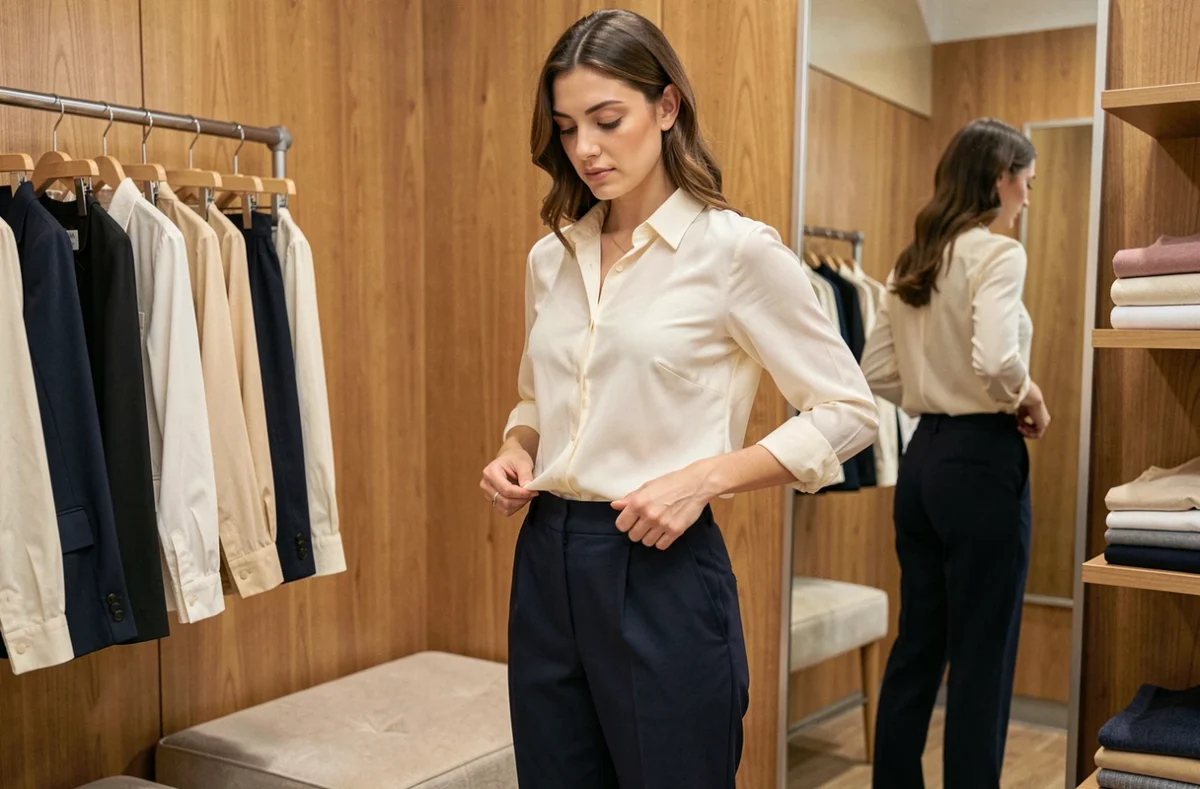
M and L do not correspond to fixed measurements. The European standard EN 13402 proposes a system based on body measurements and a pictogram, but it is voluntary and does not specify the dimensions of the garment itself. Two items labeled M can have different cuts, body lengths and armholes. Choosing between these sizes means considering ease and drape, not just bust or hip measurements.
EN 13402 standard and the limitations of women’s size conversion charts
Most online guides offer a single chart: bust, waist and hip measurements, followed by a letter. This chart is based on the EN 13402 standard, which defines measurement ranges associated with pictograms.
The problem is that this standard does not regulate garment fit. It indicates which body shape a size is intended for, not how many centimeters of fabric make up the finished product. One brand may design its M with three centimeters of ease at the bust, while another allows six. The label is the same, but the garment is not.
We recommend never relying on the letter alone. When the product page provides the garment’s flat measurements (bust width, back length, shoulder width), they are more reliable than a generic size chart. A half-centimeter shift in shoulder width can change how a blazer hangs.
To find out what a women’s size M corresponds to across the most common brands, you need to compare at least three measurements: bust, waist and torso length. Relying on just one measurement almost always leads to mistakes with structured garments (jackets, fitted dresses, jumpsuits).
Ease and desired drape: choosing between M and L without trying them on
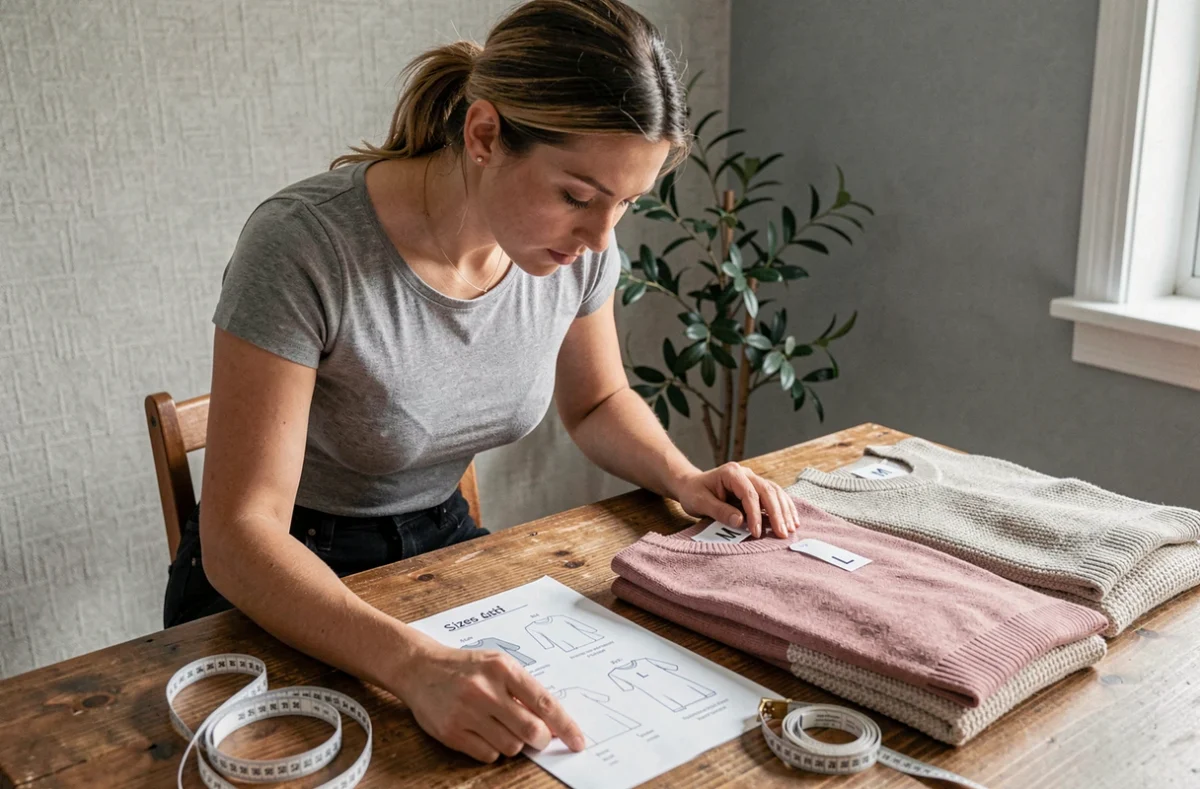
Ease is the difference between your body measurements and those of the garment when worn. It varies by garment type. A jersey T-shirt can have negative ease (stretch fabric fitted close to the body). A poplin shirt needs at least two centimeters of ease at the bust to allow arm movement without pulling at the buttons.
When your measurements are at the top of the M range or the bottom of the L range, your choice depends on the drape you want:
- For a fitted look (sheath dress, tailored blazer, dress pants), stick with M as long as the minimum ease is met. An oversized garment in this category looks shapeless, and ironing won’t fix it.
- For a relaxed look (oversized sweater, open shirt, straight-cut coat), choosing L adds comfort without distorting your silhouette. The fabric hangs more loosely, which is the intended effect.
- For technical outerwear (puffer jacket, parka, rain jacket), check whether the brand allows for a mid-layer. If so, L will accommodate a sweater without constricting your shoulders.
This approach assumes the brand publishes garment measurements. If it doesn’t, the only reliable factor is the return policy.
Return policy and online shopping: the overlooked factor in choosing a size
In France, distance purchases from a business come with a 14-day withdrawal period. This right allows you to order two sizes and return the one that doesn’t fit. The catch is that the seller can make the customer pay return shipping, provided they were informed before the order was placed.
Before checking out with both an M and an L, checking three things can make all the difference:
- Are returns free, or does the customer have to pay? Some retailers advertise free returns on their home page but exclude sale items or products sold through third-party marketplaces.
- Does the refund cover only the product price, or does it also include the original shipping costs? The answer varies depending on the terms and conditions.
- After the return parcel is received, the actual refund time can range from a few days to several weeks, depending on the seller’s logistics process.
Ordering two sizes is a sensible strategy only when the net cost of returning one is zero or negligible. Otherwise, it’s better to spend a few minutes taking accurate measurements.
How to take accurate measurements
A flexible tape measure placed directly against the skin or over thin underwear gives more consistent results than measuring over a sweater. Measure your bust at its fullest point, your waist at its natural indentation (above the navel), and your hips at their widest point, including your buttocks.
Take each measurement twice and use the average to reduce reading errors. A two-centimeter difference in hip measurement can be enough to move you from M to L, depending on the brand’s size chart.
Size recommendation tools: what they really measure
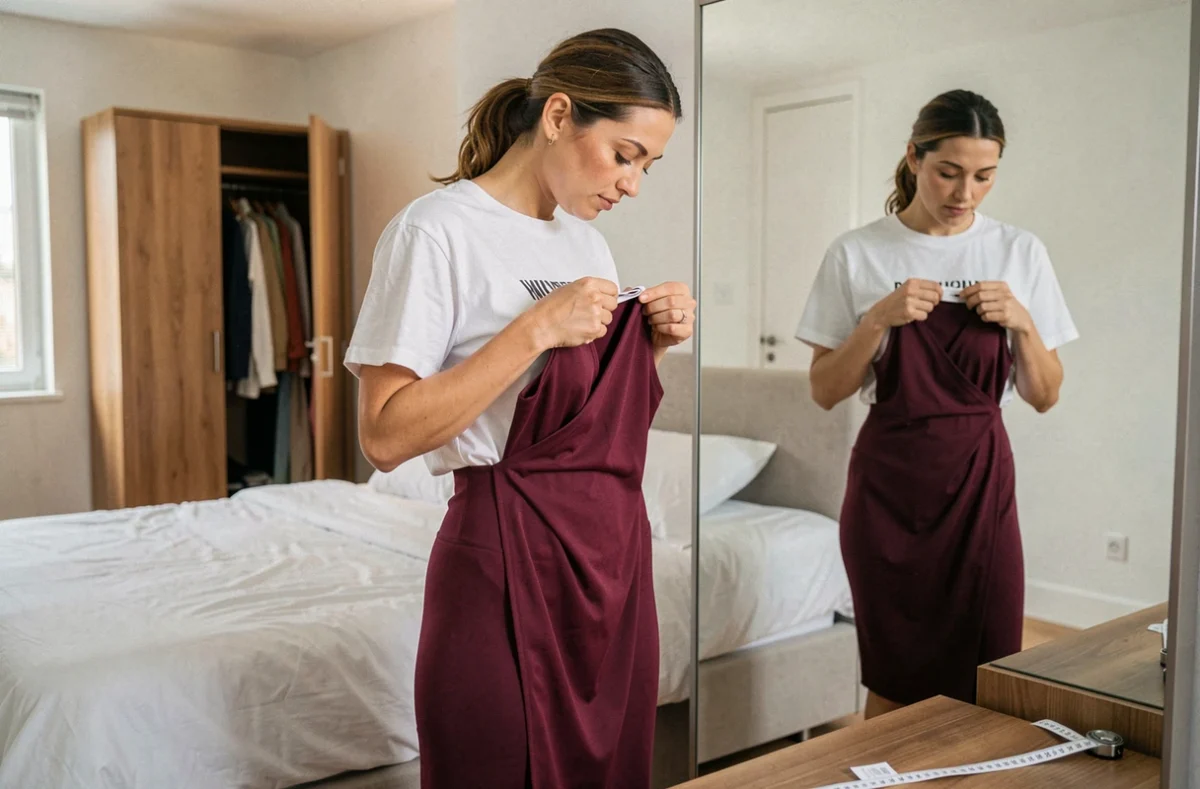
Size recommendation tools built into e-commerce sites are no longer limited to asking about your height and weight. Recent versions compare the measurements you provide with your purchase history and aggregated return data. The goal is to predict not the theoretically correct size, but the size you won’t return.
Some brands are experimenting with augmented reality virtual fitting rooms. However, the reported results come from the providers themselves. No published independent study allows us to generalize a return-reduction rate. So proceed with caution: these tools can help you choose between two close sizes, but they don’t replace checking flat garment measurements when available.
France’s national body-measurement survey highlighted a persistent gap between the measurements actually observed in the population and the sizes most commonly associated with the available clothing. Size charts still reflect outdated averages, which explains why so many women hesitate between M and L even when their measurements are perfectly standard.
Choosing between M and L is rarely just a matter of centimeters. It depends on the drape you want, the type of garment, how transparent the brand is about its measurements, and the actual cost of a potential return. When the product page lists flat measurements, compare them with your own and allow for the ease suited to the style. When it doesn’t, the return policy is your safety net.