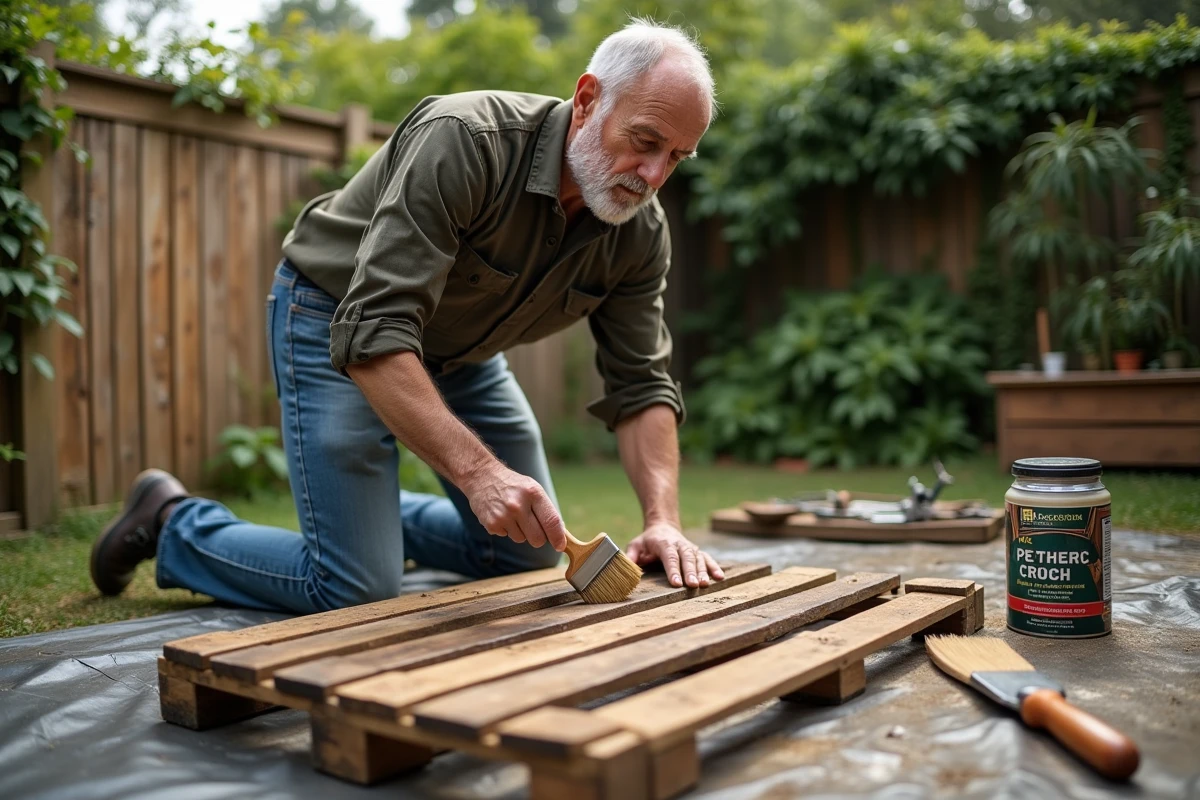
A free pallet, a few screws, an afternoon of DIY, and there you have it: a garden lounge or a flower box. The problem arises with the first downpour: the wood swells, grays, and then becomes covered in mold within a few weeks. Pallets are made from softwood or low-density hardwood, chosen for their low cost and not for their weather resistance. Without proper protection, rotting can happen very quickly.
NIMP15 Marking and MB Pallets: Sorting Before Any Treatment
Before sanding or applying anything, turn the pallet over and look for the marking cartridge. You will find a symbol that conditions the next steps of the project.
Pallets marked HT (Heat Treatment) are the only ones suitable for reuse. This symbol means that the wood has undergone a thermal treatment, without chemical products. EPAL pallets generally bear this marking.
On the other hand, pallets marked MB (methyl bromide) pose a real problem. Since 2022, the prevention sheets from INRS and several CARSATs formally advise against their use for outdoor facilities accessible to the public, due to residual risks related to the accelerated aging of these chemically treated woods in humid conditions. If your pallet bears the MB marking, do not reuse it for furniture or a terrace.
Choosing the right base simplifies the entire treatment of outdoor pallet wood and avoids protecting a material that will deteriorate despite your efforts.
Sanding and Drying: Two Steps That Determine Product Durability
Have you ever applied a stain to raw wood and noticed it peeling off after a few months? The problem rarely comes from the product. It comes from the preparation.
Sanding to Open the Fibers
Pallet wood often arrives dirty, sometimes greasy. Medium grit sanding (between 80 and 120) removes the soiled surface layer and opens the fibers. The protective product then penetrates instead of staying on the surface.
Always sand in the direction of the fibers, never across. Cross scratches retain water instead of allowing it to drain.
Allow to Dry Properly
Applying a saturator or oil on damp wood traps moisture inside. The result: blisters, blueing, peeling of the protective film. The wood must be dry to the touch for several days before any application.
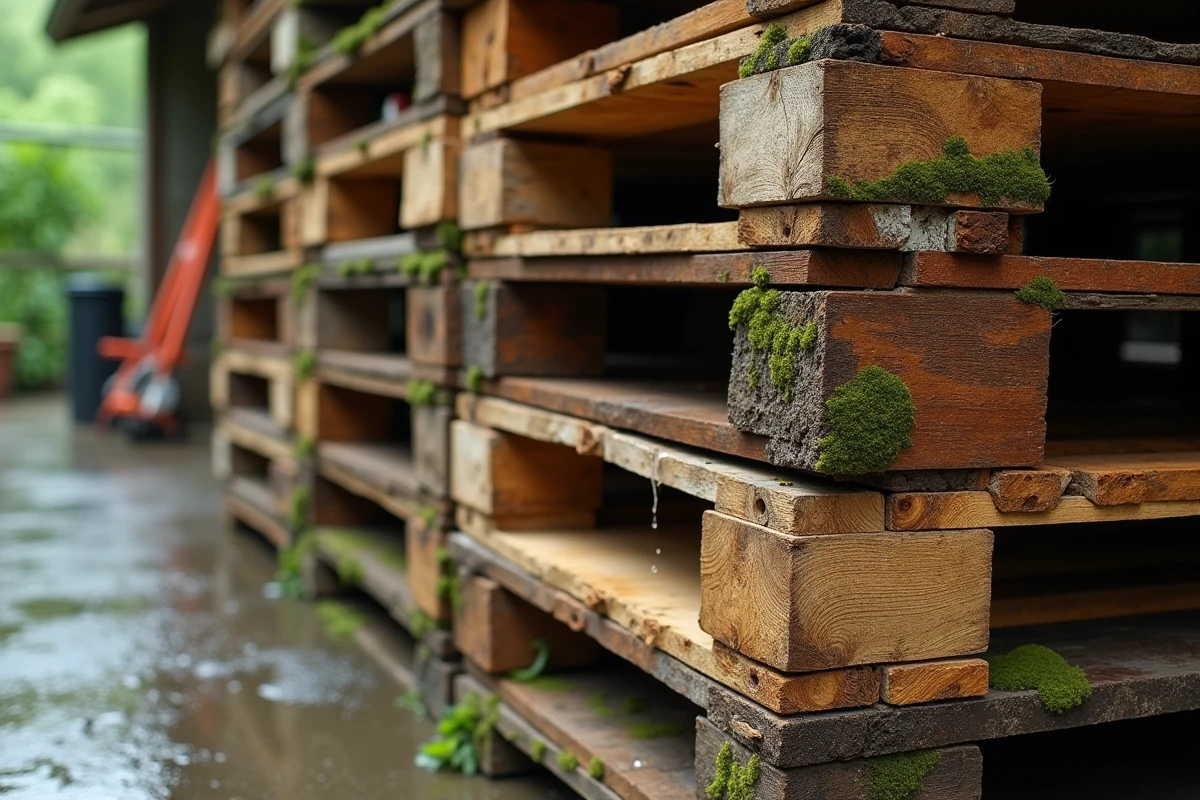
If you store your pallets before working on them, avoid covering them with a tarp that reaches the ground. The storage guide from the European Pallet Association (EPAL, revision 2023) recommends only covering the top while leaving the sides open. This ventilation reduces condensation and limits mold much better than a sealed tarp.
Saturator, Oil, or Stain: Which Product to Choose for an Outdoor Pallet
The market offers two main families of products: non-film-forming (which penetrate the wood) and film-forming (which create a surface layer). Each family meets a different need.
Non-Film-Forming Products: Saturator and Oil
The saturator penetrates the wood fibers without creating a film. Water beads on the surface, but the wood continues to breathe. This is the most suitable solution for pallets used on terraces or in planters, where moisture also comes from below.
- The outdoor wood saturator deeply nourishes the fibers and limits graying. It is applied with a wide brush or roller, in one or two coats depending on the wood’s porosity.
- Wood oil (linseed, tung) offers comparable protection but requires more frequent maintenance, often twice a year for furniture exposed to the elements.
- These products do not peel: when the protection diminishes, the wood simply loses its nourished appearance. Just reapply without sanding.
Film-Forming Products: Stain and Paint
The stain deposits a semi-transparent film that protects against rain and UV rays. It is suitable if you want to maintain the wood’s appearance while slightly coloring it. The stain requires perfectly dry and sanded wood, otherwise the film adheres poorly and cracks.
Microporous paint masks the grain but offers the most complete protection against moisture. It remains relevant for pallets transformed into fences or cladding, where the aesthetics of raw wood matter less.
- The stain is renewed every two to three years depending on exposure.
- Microporous paint lasts longer but requires light sanding before each new coat.
- Both products create a film: if this film cracks, water seeps underneath and gets trapped, which accelerates degradation instead of slowing it down.
Long-Term Maintenance: What Really Makes an Outdoor Pallet Last
The treatment product only does half the work. The design of your furniture or terrace is just as important as the chemical protection.
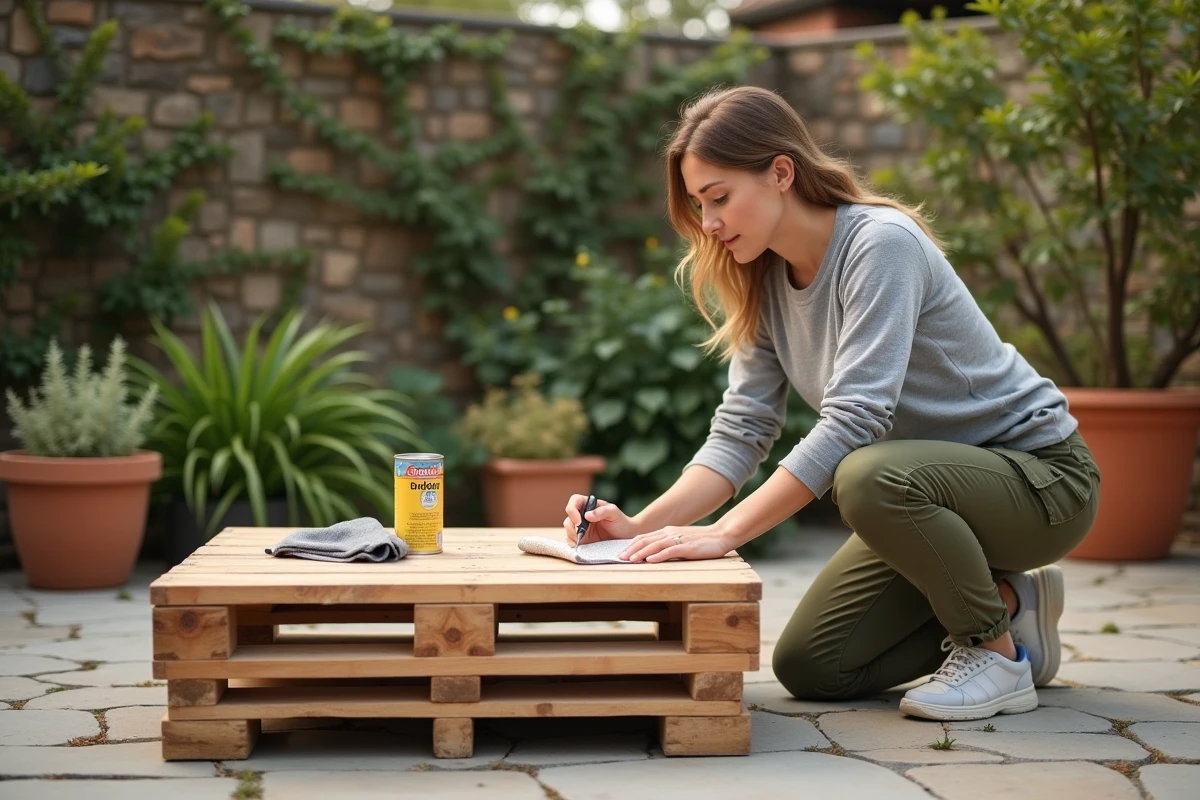
Lifting the pallets off the ground by a few centimeters radically changes their lifespan. Direct contact with the ground or a damp slab keeps the wood in a permanently saturated area where no saturator lasts long. Some spacers, blocks, or metal feet are sufficient.
Check every spring the most exposed areas: the tops of the seats, the lower corners, the joints between boards. If the wood has lost its nourished appearance or if water no longer beads, a maintenance coat of saturator or oil is enough without sanding everything.
A well-designed pallet furniture (HT wood, careful sanding, renewed saturator, elevated off the ground) can last several seasons outdoors. It will never be class 4 oak, but for the cost of a pot of saturator and an afternoon of preparation, the value for money remains hard to beat.