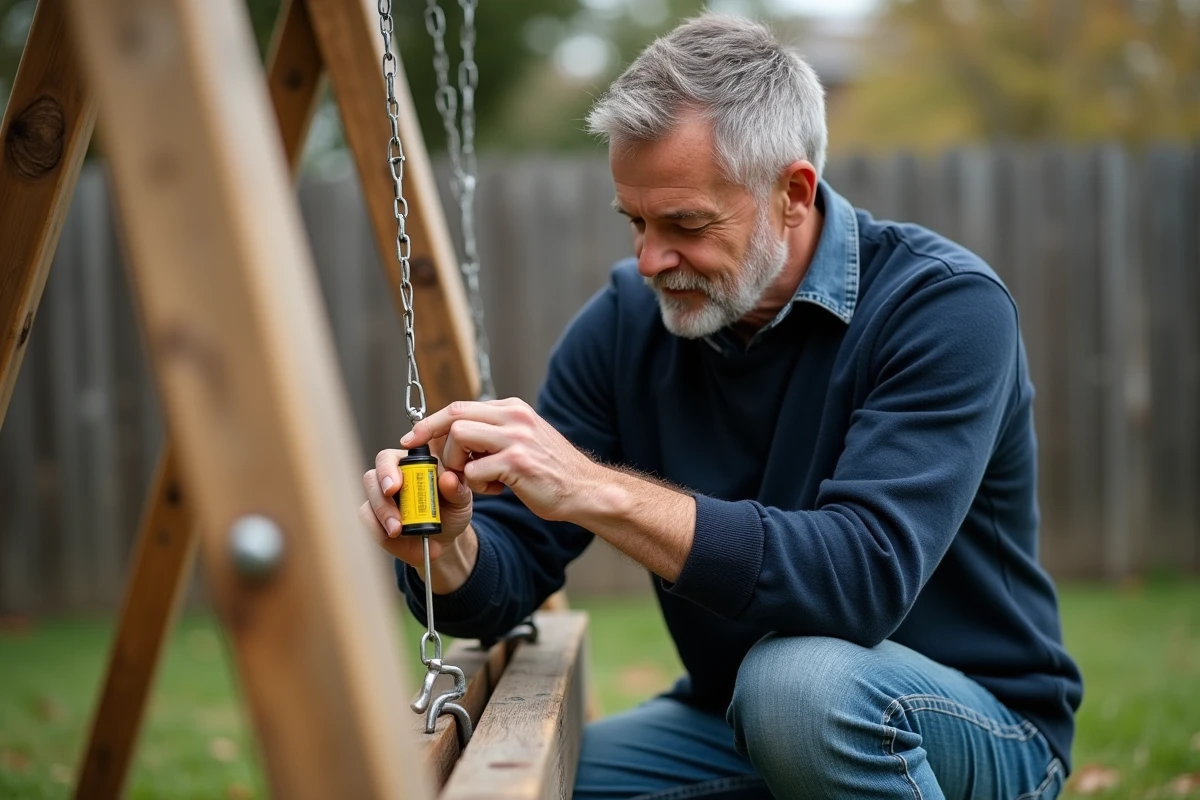
A persistent squeak can indicate premature wear of the fastening elements or a misalignment in the structure. The systematic application of lubricants does not always solve the problem, risking to worsen the situation on certain wooden parts. In contrast, some recent models of swings remain silent for years without intervention, thanks to specific materials and treatments.
Neglecting small noises opens the door to cracks or deterioration of the bearings, up to breakage. However, a few well-chosen actions or suitable products are enough to eliminate most squeaks, and sustainably.
Why does a swing squeak? The unsuspected causes behind the noise
If the squeaking of a swing annoys you, know that nothing is by chance. Each creak reveals a flaw: a damaged hinge, an axle eaten away by rust, a pin that is wearing out, or simply a bit of corrosion sneaking in. Humidity, aided by the weather, accelerates degradation: each use accentuates the weak point that demands your attention.
Wear gains ground with each use. Metal rubbing against metal, a fastening that plays, a slightly loose bolt… and the entire balance is threatened. Add rain, temperature variations, or pollution, and the structure is undermined in the long term.
To pinpoint the root of the problem, identify the most common causes:
- The metal axles that eventually wear out over the seasons
- Corrosion, discreet at first, but which attacks deeply
- Fastenings that loosen over time
- Dirt or deposits lodged in the joints, built up over time
If you want to go further in the search for concrete solutions, feel free to consult Les Défricheurs for your solutions. Detecting the exact source of the noise is already putting an end to the vicious cycle of wear and corrosion on the swing.
Persistent squeaking: what consequences for your wooden swing?
The appearance of a lasting squeak on a wooden swing alerts to the weaknesses of the structure and the health of the fastenings. A noise that settles often betrays too rare a check or a vigilance that has dulled. The tightening loses its strength; the threading wears out and the overall solidity weakens, often insidiously.
Without regular checks, a swing ages prematurely. Moisture seeps into the wood, causing it to swell, and then cracks appear. If the wood is not protected (stain, oil, or varnish), water infiltrates faster, moss and fungi gain ground, and the posts lose their robustness. In the end, stability is at stake and the safety of those swinging is also at risk.
To maintain a reliable swing, adopt a true inspection routine. Carefully inspect each fastening point, tighten as soon as any play is felt, monitor the condition of the wood, and apply appropriate protection. If the wood shows signs of advanced fatigue, calling a carpenter to renovate or replace parts becomes the safest solution.
Here are some reflexes to follow to maintain the reliability of your installation:
- Look for the appearance of splinters, cracks, or other signs of weakness on the wood
- Ensure that the joints have no play
- Refresh the stain every two years to counter humidity
- Immediately reinforce any suspicious fastening
These simple actions increase the longevity of the swing and maintain the safety of both children and adults who just want to enjoy a suspended moment.

Simple tips to sustainable solutions to finally enjoy a silent swing
A squeak is not a fatality for your swing. The first action to consider is lubrication: a dedicated spray or food oil applied to the hinge axle or pin is often enough to restore smooth movement. Some even prefer coconut or olive oil in its natural form, which is remarkably effective in limiting metal-on-metal friction.
Vigilance does not stop there. Fastenings gradually loosen; get into the habit of regularly tightening the screws. To prevent the screws from loosening, add a nylstop nut or a drop of thread locker if necessary, two small tips that make all the difference over time.
When the noise comes from the rings rubbing against the wood, wrap them with a piece of bicycle inner tube. Simple and immediate to absorb unwanted sounds. You can also slip a rubber damper between the screws and the structure: vibrations are reduced and silence returns.
Some habits to cultivate for lasting results:
- Lubricate all moving parts at each change of season
- Check the tightening after extreme temperature variations
- Replace without delay any parts marked by corrosion
With a few methodical gestures, the swing regains its calm and reliability. The cries of joy take over, and under the sky, the only sound that remains is that of the wind in your memories.