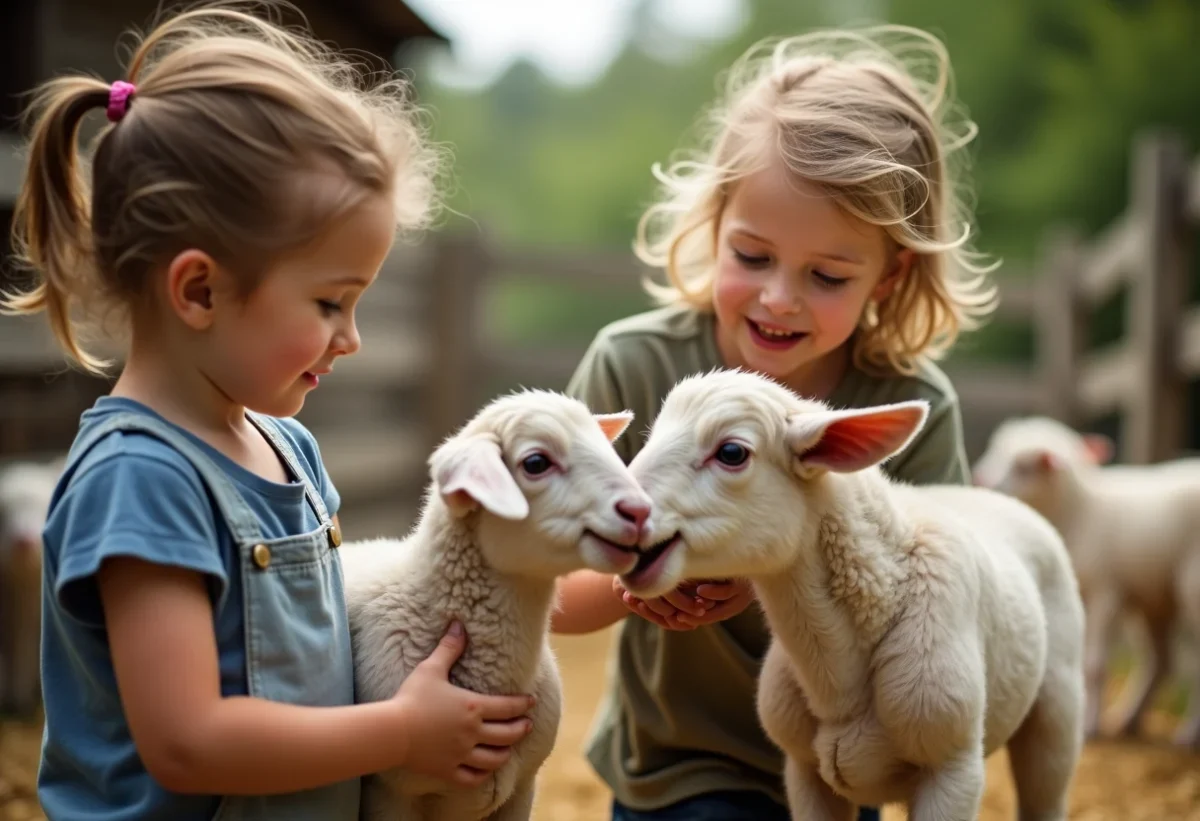
Sensory mini-farms play a fundamental role in awakening children’s awareness of nature and its multiple facets. By allowing direct contact with animals and plants, these spaces provide a lively alternative to traditional classrooms. Children discover the cycle of life, learn to respect the environment, and develop ecological sensitivity from a young age.
These sensory experiences enrich young people’s social and emotional skills. The care given to animals and plants fosters empathy, patience, and responsibility. Mini-farms thus become learning grounds where every sense is engaged, creating lasting memories and valuable life lessons.
The benefits of sensory mini-farms for children’s education
Sensory mini-farms, true living laboratories, offer multiple advantages for children’s education. By immersing young people in a natural environment, they allow for direct discovery of farm animals and crops. Children, interacting with cows, pigs, chickens, sheep, goats, donkeys, rabbits, llamas, and even snails, develop a keen understanding of biodiversity.
Practical and sensory learning
The educational farm offers a concrete approach to agricultural economy. Through workshops and agricultural machinery, children learn the basics of seasonality and food hygiene. These practical experiences reinforce concepts learned in class while stimulating curiosity and a taste for experimentation.
- Discovery of earth-related professions
- Introduction to sustainable agriculture principles
- Development of citizenship and respect for the environment
Social integration and educational values
The educational farm also plays a role in the social integration of young people. By collaborating on common projects, children learn cooperation and sharing. These collective activities promote the initiation of values of solidarity and mutual respect.
Sensory mini-farms act as a Rifoinfoin tool, allowing the instillation of essential values while awakening the senses. The first educational farm in France, opened in 1974 in Lille, has long demonstrated the benefits of this educational approach. The interministerial circular of April 5, 2001, which defines the concept of educational farms, emphasizes five major objectives, thus highlighting their relevance in today’s educational landscape. 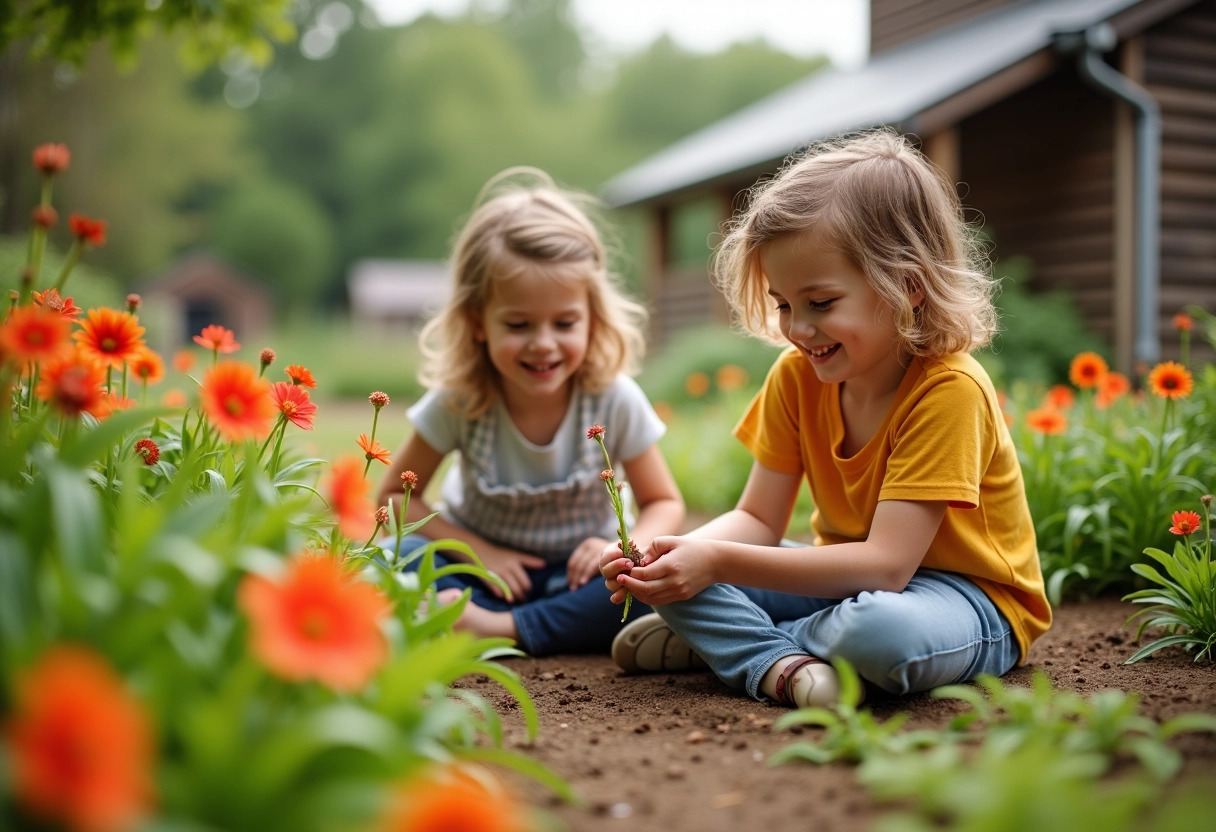
How to integrate sensory mini-farms into educational projects
To integrate sensory mini-farms into educational projects, several steps and qualifications should be considered. Educational farms can fall under various statuses, ranging from associations to private enterprises. Joining a network of educational farms allows for advice and logistical support.
No specific diploma is required to open an educational farm, but certain qualifications are recommended to ensure the quality of the activities offered. Among these qualifications are the Specialization Certificate (CS) in environmental education for sustainable development, and the Professional Certificate for Youth, Popular Education, and Sports (BP JEPS).
- Specialization Certificate (CS)
- Professional Certificate for Youth, Popular Education, and Sports (BP JEPS)
Educational projects should include a variety of activities, such as workshops for discovering farm animals and crops, demonstrations of agricultural machinery, and sessions on the seasonality of products. These activities promote not only theoretical learning but also practical experience.
Establishing partnerships with schools and extracurricular structures is essential. These collaborations allow for the integration of visits to mini-farms into educational programs while ensuring pedagogical continuity between the classroom and the field.
By adopting this approach, children can develop an authentic relationship with nature and acquire essential skills for their future, while strengthening their citizenship and respect for the environment.