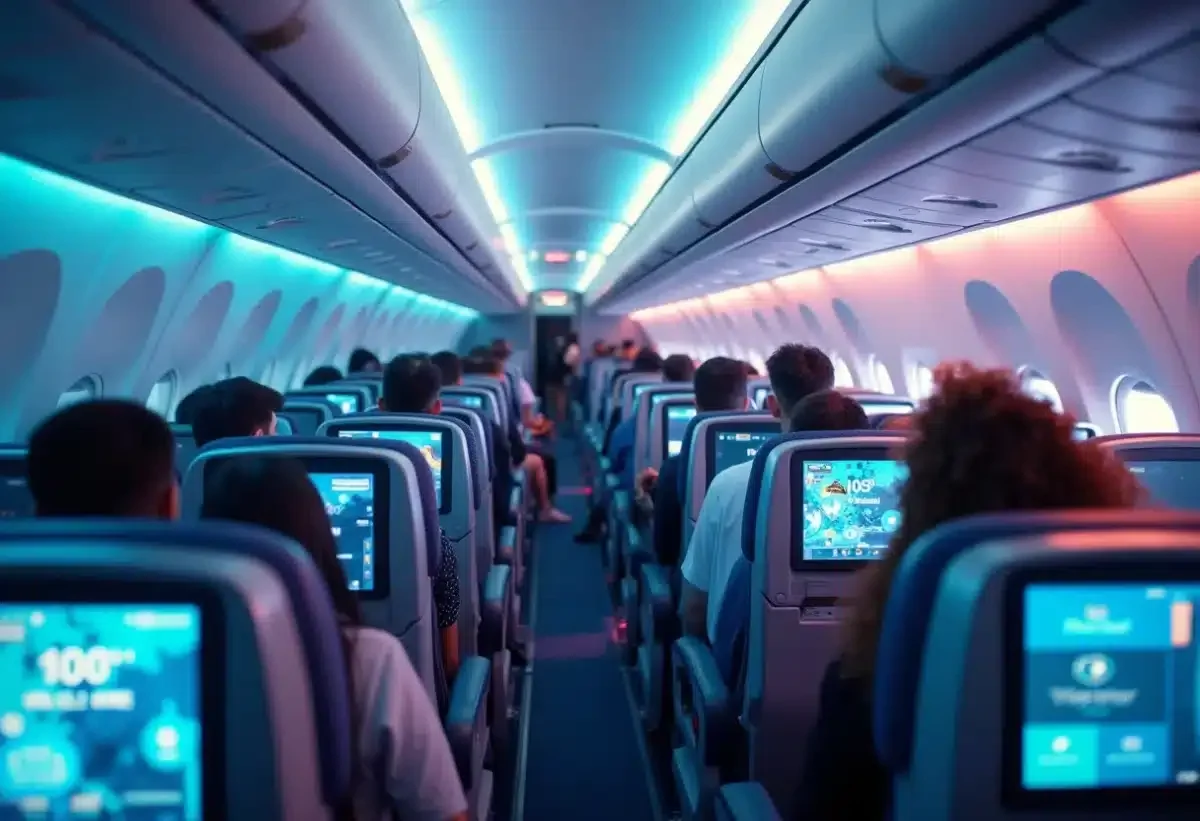
Air travel is about to undergo a radical transformation in 2024. Unprecedented technological advancements promise to make flights faster, safer, and incredibly more comfortable. Among these innovations, next-generation electric planes could significantly reduce the carbon footprint of the industry, while augmented reality systems will enhance the passenger experience by offering immersive entertainment and real-time information.
Airports will not be left behind with the introduction of advanced biometric technologies to streamline security and boarding processes. Travel experiences will thus become more personalized and less stressful. Airlines are also investing in smart seats that can adapt to the body shape of each passenger, ensuring optimal comfort during long journeys.
Emerging Technologies in Air Travel
The travel industry is embracing cutting-edge technologies to meet the growing needs of its users. Augmented reality, artificial intelligence, contactless payments, and large-scale personalization are redefining the contours of the passenger experience. For example, the management of expense reports and international payment flows is being digitized, offering unprecedented fluidity to business travelers. Travel agencies, for their part, are investing in NDC (New Distribution Capability) to optimize their services.
Amadeus, a leader in technological solutions for the travel sector, commissioned the study Travel Technology Investment Trends. This study, conducted by Opinium, highlights investment trends in travel technologies. Machine learning is emerging as a priority for 2024, promising to optimize various aspects of flight management and passenger interaction.
Expected Impacts on Passenger Experience
Airports and airlines are adopting biometric technologies to enhance the traveler experience. At Roissy-CDG, ADP is deploying biometric gates at checkpoints, reducing wait times by 30%. This innovation promises to make travel more efficient and less stressful.
Hotels are also exploring large-scale personalization to offer tailored experiences. The integration of technologies like Connected.EasyJet allows passengers to manage their travel in a more intuitive and personalized way. These advancements, coupled with generative artificial intelligence, open up unprecedented prospects for the future of air transport.
- Augmented Reality: enriches the passenger experience with real-time information.
- Artificial Intelligence: optimizes flight management and passenger interactions.
- Biometrics: streamlines security and boarding processes.
Expected Impacts on Passenger Experience
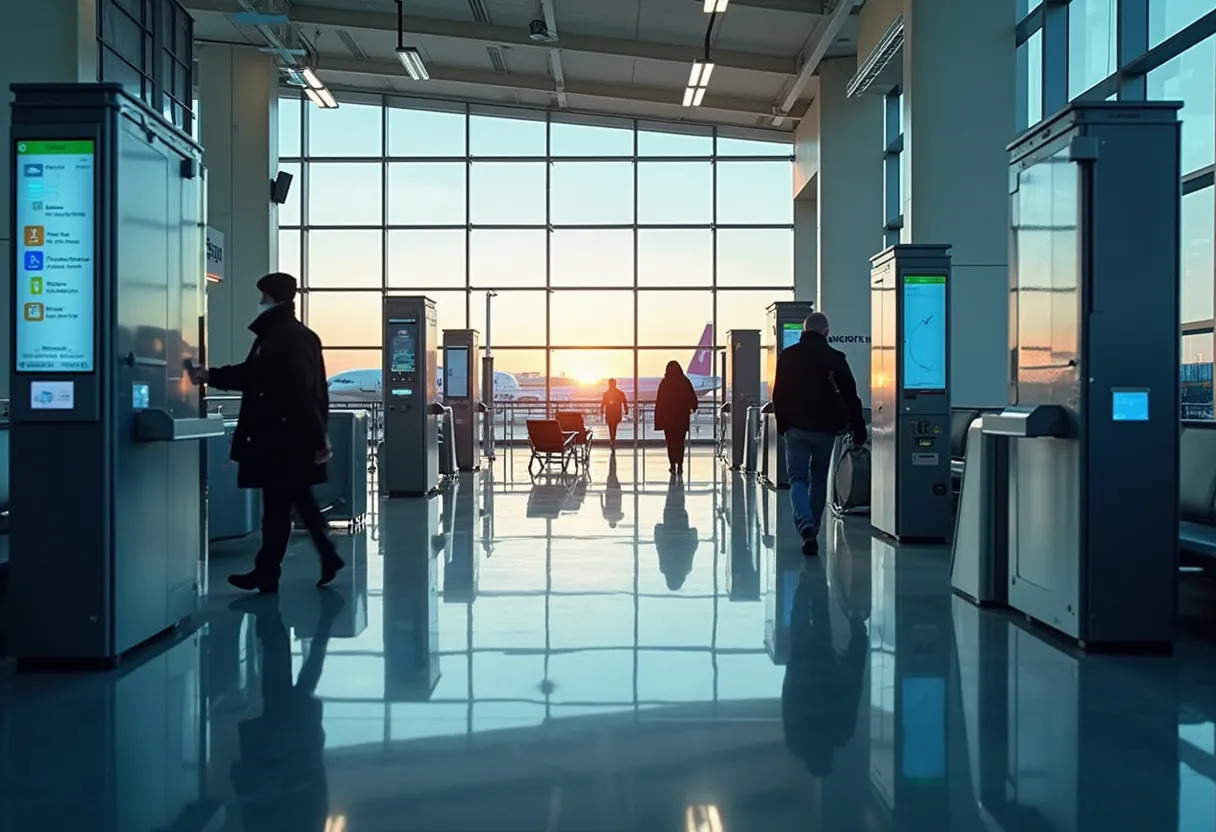
Airports and airlines are betting on advanced technologies to transform the passenger experience. The adoption of biometrics allows for faster passage through security checks. ADP, for example, has deployed biometric gates at Roissy-CDG, reducing wait times by 30%. This innovation not only improves efficiency but also enhances traveler satisfaction.
Hotels are also not lagging behind and are turning to large-scale personalization. The integration of technological solutions allows for addressing the specific needs of each client, thus creating a tailored environment. This approach is made possible by artificial intelligence, which analyzes customer preferences to offer tailored services.
- Biometrics: streamlines control and boarding processes.
- Personalization: enhances the customer experience through tailored services.
Airlines are also exploring the potential of augmented reality to enrich the passenger experience. Mobile applications provide real-time information on flights, boarding gates, and available services at the airport. These interactive tools aim to reduce stress and make travel more enjoyable.
The travel sector is also digitizing by modernizing the management of expense reports and international payment flows. This digital transformation promises greater efficiency for business travelers, allowing them to focus on the essentials of their missions.