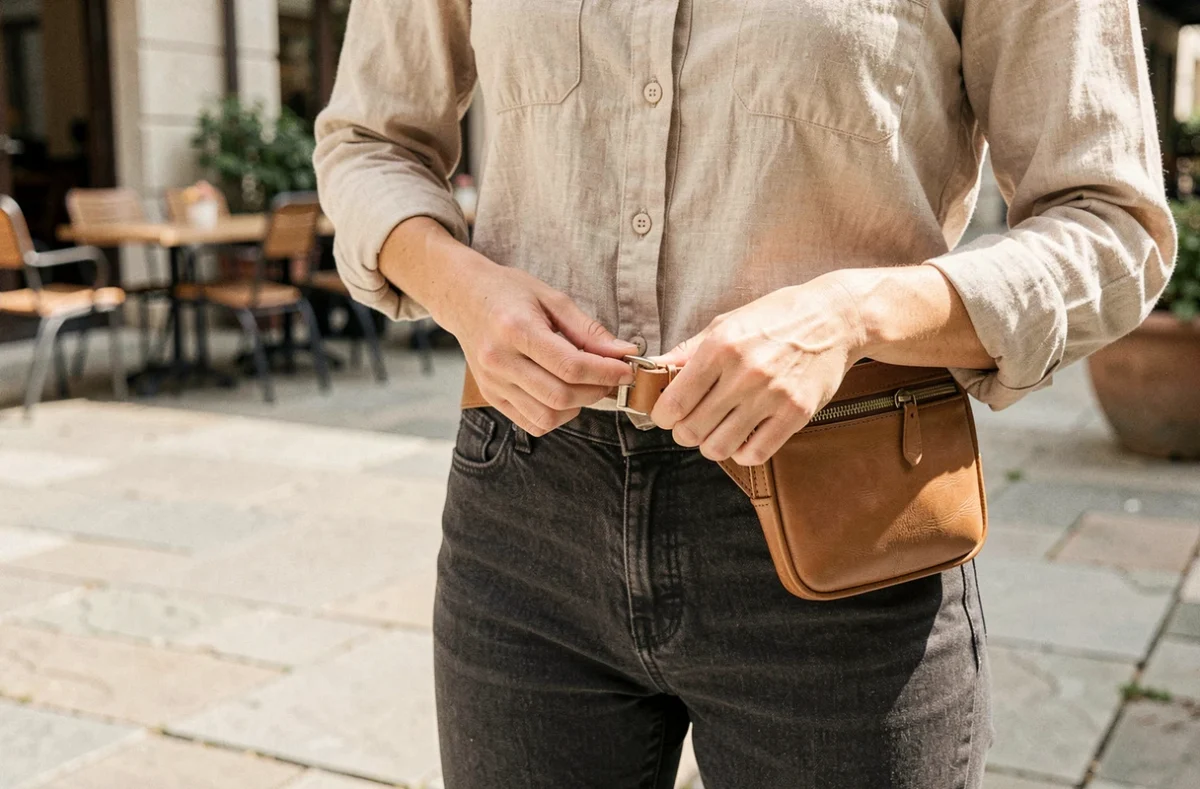
The strap of a fanny pack is often the source of most post-purchase disappointments. Too tight over a winter jacket, too loose with light clothing, slipping after twenty minutes of walking: the issue isn’t with the bag itself, but rather with a poorly anticipated strap adjustment. Manufacturers rarely provide clear markers, and no standard length has emerged in the industry.
Buckle, texture, and friction: what really keeps the strap in place
While length is the subject of much discussion, the stability of a fanny pack primarily depends on the closure system. A simple friction buckle, the most common model on entry-level bags, allows the strap to gradually slip due to the micro-movements of the hips, especially when the bag is loaded.
A mechanical locking buckle limits slipping more reliably. This type of fastener locks the strap with a notch or lever, preventing the adjustment from loosening during prolonged walking or dynamic activities.
The texture of the strap plays a complementary role. A smooth polyester strap slips more easily through the buckle than a woven model with a slightly grainy surface. Before focusing on the ideal length, it’s better to check these two points: the type of buckle and the grain of the strap. A detailed guide helps to choose the size of your fanny pack while considering these often-overlooked criteria.
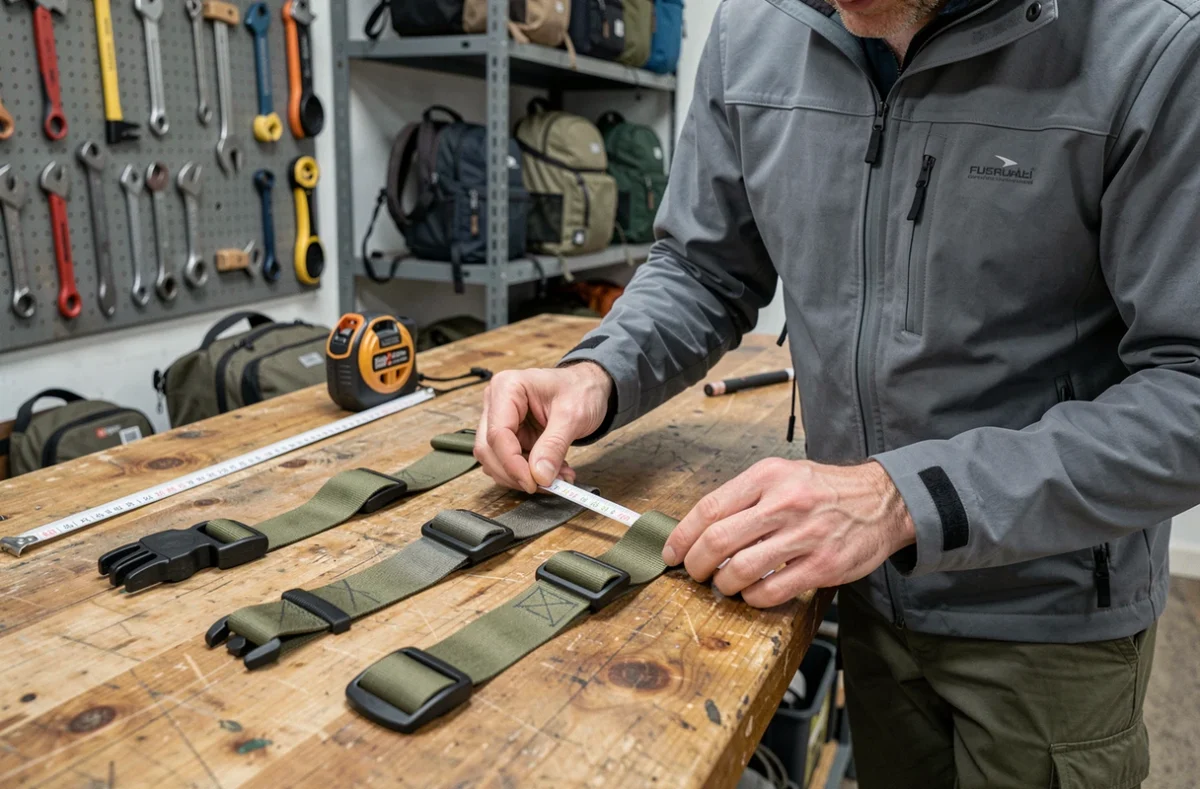
Strap length and carrying style: why a single number isn’t enough
A fanny pack worn at the waist, crossbody on the chest, or on the back does not require the same strap length. A measurement calibrated for the waist may prove insufficient for crossbody wear, where the strap must cross the torso diagonally.
Field feedback varies on this point: some wearers find that an adjustable strap over a wide range covers all uses, while others notice that excess strap can be cumbersome when folded in the buckle. The intended carrying style should guide the choice before considering body type, as the length difference between waist and crossbody wear can reach several centimeters.
The thickness of clothing changes the equation
A parameter rarely mentioned in product sheets: the outfit worn at the time of use. A strap perfectly adjusted over a t-shirt becomes too short over a winter coat or a thick puffer jacket. Customer feedback regularly reports this discrepancy, especially on models with limited adjustment range.
If the bag is to be used year-round, allowing for additional adjustment margin prevents being stuck in winter. Models with generously adjustable straps are more versatile, even if the excess strap may seem bulky in summer.
Testing the strap with the actual weight of the fanny pack
Most fittings are done with an empty bag, in-store or in front of a mirror. The result does not reflect real-world use. The weight of the contents (phone, wallet, keys, compact water bottle) exerts a downward pull that alters the position of the bag and can cause the strap to slip through the buckle.
A test with the usual load reveals the weaknesses of the adjustment. A simple method is to pull the bag down several times after filling it, then check if the buckle has moved. If the strap has slipped more than one centimeter, the holding system is insufficient for daily use.
Width and padding: complementary factors
For active uses (hiking, biking, fishing), the width of the strap and its padding are as important as length. A narrow strap concentrates pressure on a small area of skin, which becomes uncomfortable after an hour. Models designed for outdoor use often feature:
- A strap wider than average, distributing weight better across the hip or shoulder
- Foam or mesh padding at the contact area with the body, reducing friction
- A reinforced fastening system with a locking buckle, suitable for repeated movements

Leather, nylon, or polypropylene strap: the material influences the adjustment
The material of the strap determines its ability to stay in place and its durability over time. Nylon and polypropylene dominate the mainstream fanny pack market. They are lightweight, water-resistant, and easy to clean. However, their smooth surface promotes slipping in friction buckles.
Leather offers superior natural grip, but it stretches over time. A fanny pack with a leather strap adjusted tightly at first may become too loose after a few months of regular use. This phenomenon requires anticipating an additional tightening notch at the time of purchase.
Textured technical fabric straps represent an interesting compromise: they combine the lightness of synthetic materials with a surface rough enough to limit slipping. A few criteria help to decide based on the intended use:
- Daily urban use: nylon or polypropylene with a mechanical buckle, minimal maintenance
- Fashion use or dressed outings: soft leather, monitoring gradual stretching
- Sport or outdoor use: textured technical fabric with padding, tensile strength and quick drying
The choice of material directly influences the longevity of the adjustment. A strap that slips or stretches requires readjusting the bag several times a day, which negates the practical advantage of the fanny pack format.
The ideal strap length does not exist in absolute terms. It depends on the carrying style, the thickness of clothing, the weight carried, and the chosen material. Checking the buckle system and testing the loaded bag before finalizing a purchase remains the most reliable way to avoid an unpleasant surprise.